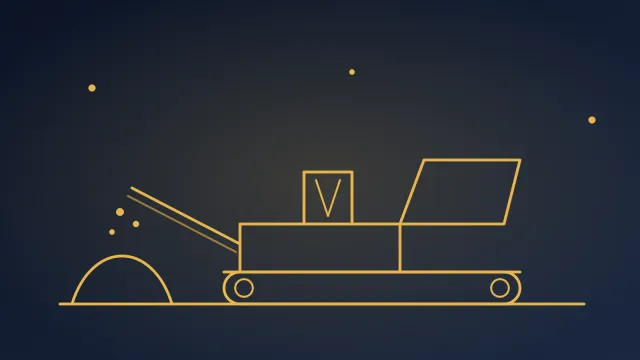
Stone crushers are at the heart of any project producing aggregate, manufactured sand or road base, and of recycling demolition waste. The mobile crusher is one of the most requested options today, because it goes to the rock or the job site instead of the rock being hauled to it, which cuts transport costs and setup time.
China makes a wide range of crushers, from small units to complete crushing plants and mobile crushers on tracks or wheels. The right choice depends on the type of rock, the product sizes you need, the output and the conditions on site.
The stages of crushing rock
Large rock is rarely turned into finished aggregate by a single crusher. Crushing usually happens in stages:
- Primary crushing: reduces large quarry rock to medium sizes. A jaw crusher is the usual choice.
- Secondary crushing: reduces size further and improves particle shape. A cone or impact crusher is used.
- Tertiary crushing and sand making: produces very small sizes or manufactured sand, using a fine cone crusher or a VSI.
- Screening: vibrating screens split the product into sizes and send oversize back to the crusher.
Types of stone crusher
1. Jaw crusher
Crushes rock by squeezing it between a fixed jaw and a moving jaw. It is the most common primary crusher.
Strengths: simple and robust, handles large and hard rock, reasonable running costs.
Weaknesses: the product can be flaky, and on its own it isn't suited to very small sizes.
2. Cone crusher
Crushes rock between a gyrating cone and a fixed outer shell. Used for secondary and tertiary crushing.
Strengths: suits hard, abrasive rock such as granite and basalt, gives good particle shape, and its wear parts last longer than an impact crusher's in hard rock.
Weaknesses: higher price, and it needs steady feeding and good lubrication and hydraulic systems.
3. Impact crusher
Crushes rock by throwing it with rotating hammers against impact plates. Horizontal shaft impactors (HSI) are the common type.
Strengths: cubical product and a high reduction ratio, well suited to limestone and medium-hard rock, and widely used for recycling demolition waste and concrete.
Weaknesses: hammers and plates wear quickly in hard, abrasive rock.
4. Sand-making crusher (VSI)
A vertical shaft impactor used to make manufactured sand and improve the shape of fine particles.
5. Hammer crusher
Used for relatively soft materials such as soft limestone, coal and some minerals. Not suited to hard, abrasive rock.
What is a mobile crusher?
A mobile crusher is a complete crushing unit mounted on a movable chassis. It usually includes:
- A feeder with a hopper to receive the rock.
- A crusher: jaw, cone or impact.
- Conveyors to discharge the product.
- A vibrating screen on some models, to split sizes and return oversize.
- A power source: diesel engine, electric drive or a hybrid system.
- A magnetic separator on recycling models, to remove rebar.
Tracked mobile crushers
These move under their own power on tracks like an excavator, can be repositioned on site in minutes and are quick to set up.
They suit quarries with changing faces, road projects and recycling demolition waste in cities.
Wheeled mobile crushers (portable plants)
Mounted on a trailer pulled by a truck. Usually cheaper than tracked units, but they take longer to set up and need flatter ground.
They suit projects that move between distant sites on paved roads.
When to choose a mobile crusher and when a stationary one
A mobile crusher makes more sense when:
- The work site changes often or you have several sites.
- You want to cut the cost of trucking raw rock.
- The project is temporary, such as a road, dam or infrastructure job.
- You are recycling demolition waste in cities.
- You need to start producing quickly without concrete foundations and long installation.
A stationary crusher makes more sense when:
- The quarry will stay in one place for many years.
- You need very high, continuous output.
- Grid power is available, since electric drive is usually cheaper to run than diesel.
- You want a multi-stage plant with intermediate stockpiles and large screens.
Many projects use a mix: a mobile jaw crusher for primary crushing at the quarry face, followed by mobile or stationary secondary crushers and screens.
How to choose the right crusher
1. Rock type
This is the most important point. Granite and basalt are hard and abrasive and usually suit a jaw crusher followed by a cone crusher. Limestone can be crushed efficiently with an impact crusher.
Tell the supplier the rock type, ideally with hardness and abrasiveness data or a sample.
2. Feed size
What is the largest rock you will feed in? The crusher's feed opening must be clearly larger than the largest rock.
3. Product sizes
Define the sizes you want to sell, such as 0–5, 5–10, 10–20 and 20–40 mm, and the share of each. This sets the number of crushing stages and screens.
4. Output
Measured in tonnes per hour. Catalogue figures are usually for ideal conditions, and real output depends on rock type, moisture, feed size and product size.
An illustrative example: if a crusher actually produces 150 tonnes per hour and runs 8 hours a day, 25 days a month, monthly output is about 150 × 8 × 25 = 30,000 tonnes, before stoppages and maintenance.
5. Power source
- Diesel: full freedom on site, but higher fuel costs.
- Electric: cheaper to run with less maintenance, but needs grid power or a large generator.
- Hybrid: combines both, available on some models.
6. Transport dimensions and weight
For a mobile crusher, check its dimensions and weight in transport mode, because they determine how it ships by sea and moves on roads in your country.
What to check on a crusher before shipping
- Frame and welds, especially in vibration and loading zones.
- Wear parts: jaw plates, cone liners, impactor hammers and plates. Ask what steel they use, such as high-manganese steel for jaws and liners.
- Bearings: brand and size, since they are one of the main causes of breakdowns.
- Engine: on diesel mobile crushers, check the engine brand and model and whether parts are available in your country.
- Hydraulics: for adjusting the discharge setting, protecting against uncrushable objects and folding conveyors.
- Controls: control panel, sensors and emergency stop.
- A test run: video of the crusher running, ideally with real material.
- Documents: operating manual, spare parts catalogue and declaration of conformity.
Used crushers from China
Used crushers are available in China, especially mobile crushers from finished projects. They can save part of the cost, provided you:
- Know the engine hours and the condition of the crusher itself.
- Check wear parts, bearings and tracks.
- See a real test run, not an old video.
- Rely on an inspection report from an independent party.
- Confirm your country allows used equipment imports, and on what terms.
Shipping and customs
- Tracked mobile crushers are often too large for a container, so they ship on a flat rack, as break bulk or on RoRo vessels depending on the route.
- Stationary crushers and crushing plants are dismantled and shipped in containers and on flat racks.
- Spare wear parts ship with the crusher to save on freight.
Prepare the commercial invoice, a detailed packing list, the bill of lading and the certificate of origin, and confirm the HS code, duties and import requirements in your country, especially for used equipment.
Spare parts and wear
The cost of running a crusher isn't just the purchase price. It also includes wear parts that are replaced regularly.
Ask the supplier for:
- A list of wear parts and their approximate life with the rock you will crush.
- Prices of the main spare parts from the start.
- A set of spares with the first shipment: jaws, liners or hammers, bearings, belts and engine filters.
Common mistakes when buying a crusher from China
- Choosing a crusher on the output in the advert without linking it to the rock type.
- Using an impact crusher on very hard, abrasive rock, which drives up wear costs.
- Not defining product sizes before choosing screens.
- Overlooking the transport dimensions of a mobile crusher.
- Not asking about the engine brand and local parts availability.
- Buying a used crusher without a test run and an inspection report.
How we work with you
China Aurora (Guangzhou Aurora Trading Co., Ltd.) is a Guangzhou-based company that sources heavy equipment and machinery, inspects quality and ships from China. This is how we help you choose and import a crusher:
- You send us the rock type, feed size, product sizes, output and site conditions.
- We shortlist suitable factories and models, new or used, and send you quotes you can compare.
- We vet the factory, attend the test run and send you the video and report.
- We inspect the crusher and spare parts before loading.
- We arrange the right shipping, whether containers, flat racks or break bulk, to your country.
Send us your project details on WhatsApp at +86 185 2028 8213 for a quote.
FAQs about stone crushers
What is the best crusher for granite and basalt?
Usually a jaw crusher for primary crushing followed by a cone crusher for secondary crushing, because cone crushers handle hard, abrasive rock with less wear.
Is a mobile crusher more expensive than a stationary one?
A mobile unit usually costs more than a stationary crusher of the same size, but it saves on foundations, installation and rock haulage, so compare them on total project cost.
Can a mobile crusher be used to recycle demolition waste?
Yes. Mobile impact crushers are widely used for this, with a magnetic separator to remove rebar.
How long does a mobile crusher take to start working on site?
A tracked crusher usually needs only a short setup after it arrives. Wheeled units and stationary plants take longer to install.
Are used crushers available in China?
Yes, but inspect them carefully and see them running before you buy, and confirm your country allows used equipment imports.
Conclusion
Choosing stone crushers starts with the rock type and the product sizes you need, then realistic output, the power source and site conditions. A mobile crusher is an excellent choice for projects that move and for recycling, while stationary crushers remain better for long-term quarries and high output.
If you want us to handle crusher selection, inspection and shipping for you, send your project details on WhatsApp at +86 185 2028 8213.